September 24, 2026
Tyre Load Index Explained: Why It Matters When Your SUV Is Fully Loaded
A tyre’s load index tells you the maximum weight that one car tyre can support under specified conditions. It matters especially for SUVs carrying passengers, luggage, camping equipment or other cargo because the additional weight increases the load placed on the tyres.
Using tyres below the vehicle manufacturer’s required load rating can increase tyre flex and heat generation and may compromise safe operation.
Tyre size alone is not enough when choosing replacement tyres for an SUV in the UAE. Two tyres may have the same dimensions but have different load indices. Never replace SUV tyres with a load rating below what the vehicle manufacturer requires.
The load index is a numerical code shown as part of the tyre specification on the sidewall. It corresponds to a specific maximum load capacity in kilograms.
For example, you might see:
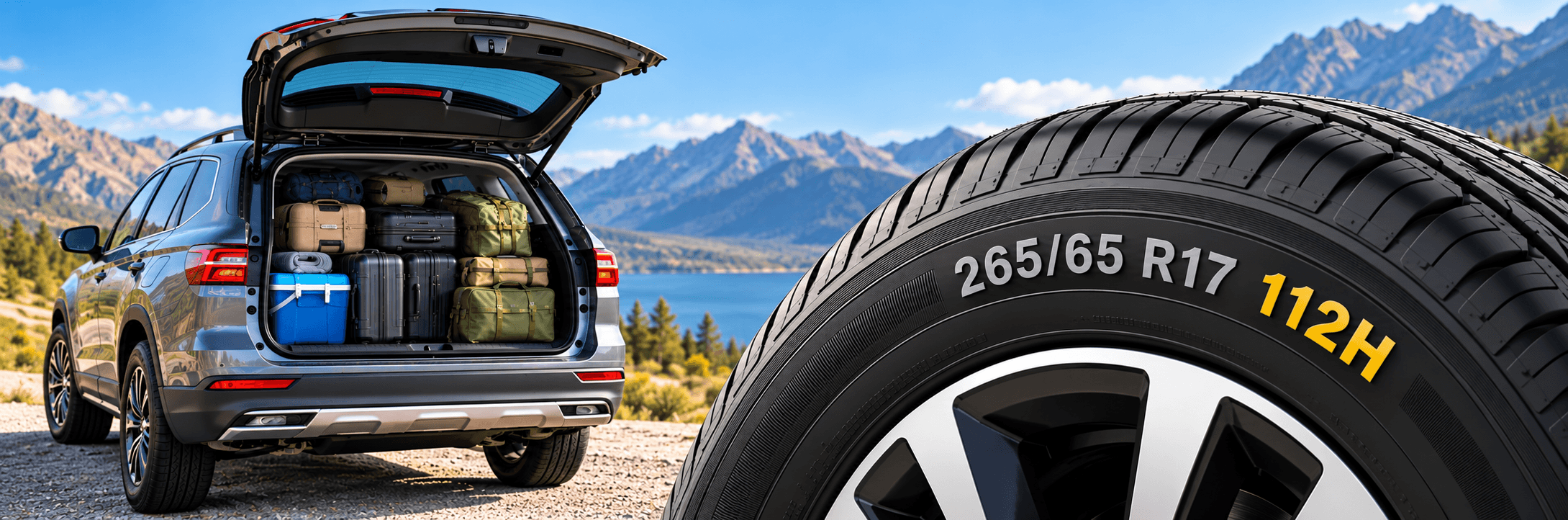
265/65 R17 112H
In this example, 265 is the nominal tyre width in millimetres, 65 is the aspect ratio, meaning the sidewall height is 65% of the tyre width, R means radial construction, and 17 is the wheel diameter in inches. The 112 is the load index, while H is the speed rating.
According to Michelin’s load-index table, a load index of 112 corresponds to a maximum load of 1,120 kg per tyre under the specified conditions. However, this does not mean every SUV using 265/65 R17 tyres should automatically use a 112 load index. Always follow the vehicle manufacturer’s required specification.
An empty SUV and the same SUV carrying five or seven passengers plus luggage place very different demands on their tyres.
All passengers, luggage, equipment, and accessories add to the vehicle's overall weight. Ultimately, the vehicle’s weight is transferred to the road through the four tyre contact patches. All four tyres do not necessarily share the load equally. The weight each axle carries may vary depending on vehicle design, cargo placement, passengers, and towing.
Tyres naturally deform where the tread meets the road. As the load increases, the tyre structure must support additional weight while continuing to operate within its designed limits.
With the correct tyre specification and inflation pressure, this deflection remains within the tyre’s intended operating range. Overloading or underinflation can increase flexing and heat generation.
An SUV loaded with passengers and traveling at highway speed is a challenging environment to operate. As the tyre rotates at highway speed, its structure repeatedly flexes at the contact patch, generating heat.
This makes proper load capacity and inflation especially important before long trips with a vehicle full of people.
Don't choose the load index based on what another SUV owner uses, even if the vehicles look similar.
The necessary tire information is usually available on the tyre placard, in the owner’s manual, or in other manufacturer documents. The specification can have tyre size, load requirement, and recommended inflation pressure under various operating conditions.
The existing tyre’s sidewall displays its size, load index and speed rating. However, an existing tyre is not always a reliable reference unless it already matches the required specification. A former owner may have installed a different tyre, so vehicle documentation is more reliable.
In certain SUVs, the tyre specifications for the front and rear axles differ. Do not assume all four tyres should have the same specifications without considering the vehicle's requirements.
In many applications, a tyre with a higher load index may be suitable, provided all other fitment requirements are correct and the specification is appropriate for the vehicle. But higher is not automatically better.
Tyres designed for higher loads may use reinforced construction, depending on the specific tyre. This can affect characteristics such as ride comfort, tyre weight, and handling, so a higher load index should not be chosen purely because the number is larger.
A higher load index does not give you the go-ahead to skip tyre pressure. A tire's load-carrying capacity depends on its inflation condition. Always follow the pressure guidelines for your vehicle and tire fitment, rather than assuming underinflated tyres are safe to use.
Using tyres below the vehicle manufacturer’s required load rating is a poor way to reduce tyre costs.
Before setting off with passengers, luggage, or additional equipment, check whether the tyres and vehicle are prepared for the extra load. A tyre may look perfectly healthy but still operate outside its intended conditions if pressure, load rating, or vehicle payload is incorrect.
Not necessarily.
Vehicle weight matters, but manufacturers select tyres based on the vehicle's overall design and expected operating loads. Two similarly sized SUVs can therefore have different tyre specifications.
Wheel size also does not determine load capacity by itself. A larger 20-inch or 22-inch tyre is not automatically capable of supporting more weight than a smaller-diameter tyre.
This is why choosing replacement tyres based purely on dimensions or appearance can result in incorrect fitment.
Choosing an SUV tyre is about more than matching the width, profile, and wheel diameter. The load index, speed rating, construction, and inflation requirements must also suit the vehicle, especially if you regularly travel with passengers, luggage, or extra equipment.
TyresWorld allows UAE drivers to compare replacement tyres by vehicle, tyre brand and size, with fittings available through its tyres UAE partner network. Before ordering, check your vehicle manufacturer’s specification and make sure the replacement tyre meets the required load and speed ratings.
For a fully loaded SUV, the correct tyre size gets you started; the correct load capacity helps ensure the tyre is actually suitable for the job.